If your boiler has started to sound like a kettle boiling, it’s a sign you shouldn’t ignore. These unusual noises can be worrying, but knowing what’s causing them helps you take the right steps. Noisy boilers often mean there’s an issue inside, like limescale build-up or sludge blocking the system. By understanding these warning sounds, you can decide when a simple check is enough and when it’s time to call a Gas Safe engineer to prevent costly damage or breakdowns.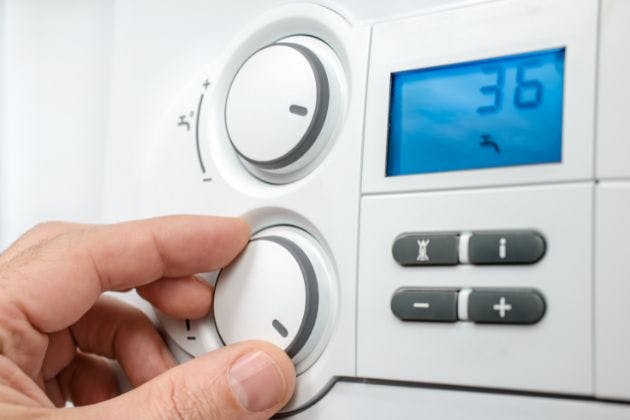
What boiler kettling actually is
Boiler kettling is the term used when a boiler makes whistling, banging or rumbling noises, often similar to a kettle boiling. It usually happens when water is overheating in parts of the system where it should not.
Instead of heat being transferred smoothly, something is restricting the flow of water. This can cause pockets of water to boil, create steam and build pressure, which then leads to those worrying noises.
A healthy boiler will make some sound as it fires up and runs, but that should be a steady, low hum. Sudden changes in noise, or anything loud and irregular, is a sign that something is wrong.
Main causes of noisy boiler kettling
Several common issues can lead to kettling. Some are linked to your local water quality, others to the condition of your heating system and controls.
Limescale on the heat exchanger: Particularly in hard water areas, limescale can build up on the heat exchanger, creating hot spots where water boils locally and causes whistling or rumbling.
Sludge or magnetite in the system: Rust particles and dirt can form a thick sludge that restricts water flow in pipes, radiators and the boiler itself.
Pump issues: A failing or incorrectly set pump may not move water around the system quickly enough, allowing it to overheat.
Partially closed or stuck valves: Valves on the system that are closed, blocked or incorrectly balanced can choke the flow of water and create noisy hot spots.
All of these problems affect how water moves through your boiler and pipework. The less freely it flows, the more likely it is to overheat in places and create kettling noises.
Normal boiler sounds compared to warning signs
It is worth knowing what is normal, so you do not worry unnecessarily. A gentle hum, a soft whoosh as the burner lights, and quiet ticking from pipes expanding and contracting can all be perfectly normal.
However, you should be cautious if you notice loud or changing noises, such as a high-pitched whistling, repeated banging or knocking, deep rumbling that sounds like boiling, or gurgling that does not clear after a short time.
Also pay attention to when the sound occurs. If it only happens for a second when the boiler fires, it may be less serious than noise that continues while the heating or hot water is running.
Safe checks you can do at home
There are a few simple observations you can make before calling out an engineer. These checks are safe for most homeowners, as they do not involve opening the boiler casing or working on gas components.
Check your boiler pressure
Look at the pressure gauge on the front of your boiler or the system pipework. For most systems, the cold pressure should sit around 1 to 1.5 bar, and rise slightly when hot.
If the pressure is very low, your boiler may struggle and become noisier. If it is too high, that can also cause issues. Refer to your boiler manual and your usual pressure top-up guide or low boiler pressure guide for step-by-step advice on topping up safely.
Listen for when the noise occurs
Try to note whether the noise happens when you run hot taps, when the central heating is on, or both. Set your programmer or thermostat so the heating is definitely calling for heat, then listen near the boiler for changes.
This information can be extremely helpful for a Gas Safe engineer, as it points towards whether the issue is on the hot water side, the heating circuit, or both.
Feel for radiator cold spots
With the heating on, carefully feel each radiator from top to bottom. If they are hot at the top and cold or cool at the bottom, this can indicate sludge building up inside.
One or two affected radiators suggest local sludge, while many radiators with cold bottoms point to a system-wide problem that may need cleaning or flushing.
When to stop using the boiler and call a Gas Safe engineer
Some kettling issues can be present for a long time without immediate danger, but there are clear situations where you should switch the boiler off and seek professional help quickly.
Stop using the boiler and contact a Gas Safe registered engineer if you notice any of the following:
Persistent, loud banging or knocking noises that make the boiler sound as if it is about to burst
Boiler frequently overheating, showing high temperature warnings or repeatedly locking out and needing to be reset
Any signs of leaks from the boiler or nearby pipework, such as drips, damp patches or rust streaks
Burning smells, scorching, or any signs of melted plastic around the boiler or controls
These can be signs of serious faults that should only be dealt with by a qualified professional. Do not remove the boiler case or attempt internal repairs yourself.
How a professional can tackle boiler kettling
A Gas Safe engineer will carry out thorough checks that are not safe for homeowners to perform. This might include inspecting and cleaning the heat exchanger, checking limescale build-up and combustion performance.
They will also look at the pump speed and operation, system water quality, and the position and condition of valves to make sure water can circulate freely. In some cases, they may suggest system cleaning or component replacement to protect the boiler.
If they identify issues like heavy sludge, they might recommend a system flush or other cleaning methods, along with fitting or servicing a magnetic filter to capture future debris.
Preventative steps to keep your boiler quieter
Prevention is almost always better than cure when it comes to boiler kettling. A clean, well-maintained system is far less likely to overheat or develop noisy hot spots.
Regular boiler servicing by a qualified engineer allows limescale, early signs of sludge and small component issues to be picked up before they become serious. It is also a chance to check the system filter, safety devices and combustion settings.
On the heating side, using a suitable inhibitor in the system water helps slow the build-up of rust and sludge. If you have a magnetic filter fitted, it should be cleaned at service visits so it can keep doing its job effectively.
In older or heavily sludged systems, your engineer may discuss system flushing options to improve circulation. Good circulation not only reduces kettling risks but also helps your radiators heat more evenly and efficiently.
Next steps if your boiler is making new or worsening noises
If the noise from your boiler is new, noticeably worse, or worrying you, it is sensible to get it checked rather than waiting for a breakdown. A professional diagnosis can often catch problems early and protect your boiler.
For further reading, it also helps to understand how your heating links with other plumbing in your home, so our plumbing services page and regular boiler servicing information are useful resources to keep handy.
If you are concerned about boiler kettling or any unusual heating noise, contact BCU Plumbing to book a diagnostic visit on 08002461041. A Gas Safe engineer can inspect your system, explain the cause in plain language and advise the best way to get your boiler running smoothly and quietly again.
EndFragment