
A boiler condensate pipe is a small but essential part of a modern condensing boiler system. If it becomes blocked, poorly routed or exposed to low temperatures, your boiler may shut down, display a fault code or make unusual gurgling sounds. Understanding the common causes can help you recognise a problem early and arrange the right professional solution.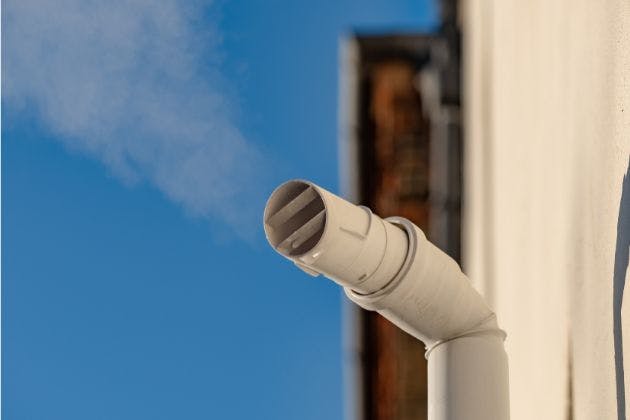
What the condensate pipe does
Condensing boilers recover extra heat from the gases produced during combustion. This process creates acidic waste water, known as condensate, which travels through a pipe from the boiler to a suitable drain or external termination point.
The pipe must allow this water to flow away safely and consistently. If the route is badly designed or the pipe becomes obstructed, condensate can collect inside the boiler or its trap. Modern boilers are designed to stop operating when this happens, helping to prevent damage and unsafe operation.
Common causes of condensate pipe problems
Poor routing and insufficient falls
A condensate pipe should generally run with a continuous fall towards its discharge point. Sections that are flat, dip downwards or contain unnecessary bends can allow water and sludge to collect. Over time, this can restrict the flow and cause the boiler to lock out.
Long internal routes may also be problematic if they have not been planned properly. A professional installer will consider the pipe length, gradient and connection point rather than simply choosing the shortest visible route.
External pipework and freezing risk
Condensate pipes installed outside are more exposed to freezing than those routed internally. A narrow pipe can freeze quickly if it is poorly insulated, runs for a considerable distance outdoors or terminates in an unsuitable location. Ice can block the outlet, causing condensate to back up into the boiler.
External routing is not automatically incorrect, but it needs careful design. The pipe should be appropriately sized, properly supported and protected with suitable insulation designed for condensate pipework.
Incorrect termination
The pipe should discharge into a suitable drain or waste connection that can safely accept acidic condensate. Terminating it in an exposed or poorly positioned location may increase the risk of freezing, splashing, odours or restricted flow.
Connections should also be secure and correctly formed. An improvised outlet or unsuitable connection can create leaks and may not meet current installation requirements.
Debris, sludge and trap blockages
Sludge, dirt and residue can build up in the condensate trap or pipe. This is more likely where the system has not been serviced regularly, where pipework has poor falls or where debris has entered an open termination point.
Gurgling or bubbling noises when the boiler starts
Fault codes linked to condensate drainage or ignition
Intermittent shutdowns or repeated boiler lockouts
Water around the boiler or condensate pipe connections
Signs your boiler may have a condensate issue
A boiler that repeatedly shuts down, particularly during a heating or hot water demand, may have a restricted condensate route. You may also hear gurgling as air and water struggle to pass through a partially blocked pipe.
Fault codes vary between manufacturers, so the code alone does not confirm the cause. Similar symptoms can be linked to other boiler components, which is why diagnosis should be carried out by a suitably qualified engineer rather than by dismantling the appliance.
Design choices that help prevent problems
During a new boiler installation or alteration, internal routing is usually preferable where practical. Keeping most of the condensate pipe inside the property reduces exposure to freezing temperatures and makes the route easier to inspect and maintain.
Where an external section is unavoidable, it should use suitable insulation and be kept as short as reasonably possible. The pipe needs a consistent gradient, secure supports and a properly selected termination point. An installer should also check that the condensate trap and waste connection are compatible with the boiler and drainage arrangement.
Regular servicing can help identify early signs of sludge, leaks, poor pipe support or an unsuitable route. You can arrange professional checks through our boiler servicing service before a minor drainage issue becomes a complete breakdown.
What a professional repair involves
A Gas Safe registered engineer will begin by assessing the boiler symptoms, condensate trap, pipe route and discharge point. They may clear or replace a blocked section, inspect the trap, test the drainage path and check for leaks or incorrect connections.
If the underlying design is the problem, the engineer may reroute the condensate pipe internally, improve the gradient, replace unsuitable external sections or install appropriate insulation. They should explain the recommended work clearly and confirm that the completed arrangement operates safely and meets relevant requirements.
Frequently asked questions
Can I fix a condensate pipe problem myself?
Homeowners should not dismantle gas components, open the boiler casing or attempt internal repairs. If the boiler has stopped, record any fault code, check that the controls have power and contact a Gas Safe engineer for advice.
Is an outside condensate pipe always unsafe?
No. External pipework can be suitable when correctly sized, insulated, supported and terminated. However, internal routing is often more resilient and should be considered where the property layout allows it.
When should I call an engineer?
Arrange professional help if the boiler repeatedly locks out, shows a condensate-related fault, makes persistent gurgling noises or has visible leakage. A qualified engineer can also review the arrangement during a boiler service or installation survey.
Arrange a professional boiler check
Condensate pipe problems are often preventable when the route, gradient and termination are planned properly. If you need a boiler service, repair assessment or advice on a replacement system, contact BCU Plumbing on 07712172171.
For homeowners considering a new system, our gas boiler installations service can assess the property and plan the condensate route as part of the installation. Booking early can help prevent recurring shutdowns and give you a more reliable heating system.