
If your boilers, catering equipment, or heaters keep playing up during busy periods, the problem might not lie with the appliances themselves. In many commercial buildings, the root cause is often undersized or deteriorating gas pipework. This outdated or inadequate piping struggles to deliver a stable and safe gas flow when demand is high, leading to inconsistent performance, frequent shutdowns, or even safety risks. Ensuring your gas pipework is correctly sized and in good condition is crucial for reliable operation and the safety of your premises.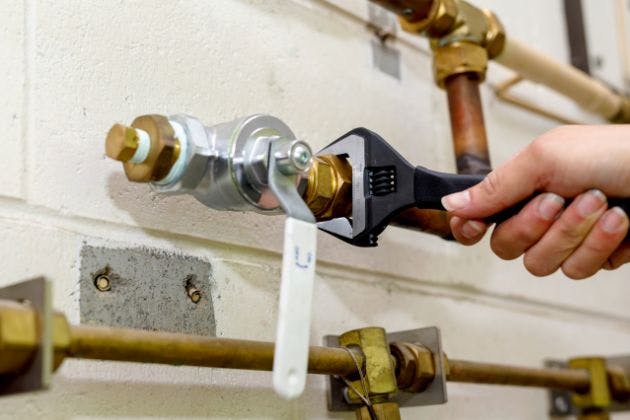
Key signs your commercial gas pipework is struggling
Gas appliances are designed to run within a specific pressure range. When the pipework is too small, poorly laid out or starting to fail, pressure at the appliance drops, especially when multiple appliances fire together.
Common day-to-day symptoms business owners notice include:
Appliances starving under load when ovens, boilers and heaters all run at the same time
Yellow or lazy flames on burners instead of a crisp, steady blue flame
Nuisance lockouts on boilers or warm air units, particularly at peak times
Inconsistent heat output across zones or appliances, with temperatures drifting or never reaching set point
Equipment behaving better off-peak when fewer appliances are firing
If you see these patterns, repeatedly resetting controls or “turning it off and on again” is unlikely to solve the underlying problem. Gas supply issues need an experienced Gas Safe registered engineer, not trial and error.
How undersized or failing gas pipework develops
Very few businesses start out with badly designed gas systems. Pipework usually becomes inadequate over time as buildings and operations change, leaving the original installation no longer fit for purpose.
Business growth and added appliances
One of the most common causes is gradual expansion. A kitchen adds more combi ovens, a warehouse adds extra heaters, or an office converts space to a server room that needs dedicated heating.
If new appliances are simply connected to the existing pipework without recalculating load and pressure drop, the original mains can become undersized. Everything might appear to work during commissioning, but once you run at full capacity, the system struggles.
Inherited pipework from previous tenants
Many commercial premises are taken over from previous occupiers with completely different needs. A small café becomes a busy restaurant, or a light office becomes a care facility with constant hot water demand.
If no one checks that the old gas pipework suits the new layout and appliance list, you can end up relying on pipe runs and meter positions that are no longer appropriate or compliant.
Poor routing, corrosion or physical damage
Even if the pipework was sized correctly, poor routing can create unnecessary pressure loss. Excessive bends, long detours and bottlenecks all increase resistance to flow.
Over time, you may also see corrosion in damp areas, damage from building work, or unsupported pipe sections that start to sag. All of this can lead to leaks, blockages or reduced effective bore, further limiting gas flow.
What a professional gas pipework investigation involves
A proper commercial gas survey looks beyond individual appliances and assesses the entire system. A qualified Gas Safe engineer will work methodically to understand both demand and delivery.
Assessing load, diversity and pipe sizing
The engineer will list all gas appliances, note their kilowatt (kW) ratings and calculate the total connected load. They will then apply appropriate diversity factors, since not every appliance runs at full output all the time.
Using this information, they check whether the existing pipe sizes and route can deliver enough gas with acceptable pressure drop from the meter to the furthest appliance, in line with current standards for commercial gas installations.
Pressure measurements and tightness testing
Next, the engineer will measure gas pressures with appliances off and then under various load conditions. Significant drops when multiple appliances run together are a strong indicator of undersized or compromised pipework.
A full tightness test will usually be carried out on the gas installation to confirm there are no leaks. This is a controlled procedure using test gauges and follows strict Gas Safe protocols, rather than improvised pressure checks.
Valves, isolation points, ventilation and flues
The investigation does not stop at pipe size. The engineer will also inspect isolation valves and emergency controls to ensure they work correctly and are positioned where staff can access them in an emergency.
They will review ventilation and flue arrangements, as poor combustion caused by low pressure can interact with weak ventilation or flue performance. The system must be looked at as a whole, not in isolation.
Where relevant, your engineer may also reference your existing documentation and may suggest improvements or additional records to support compliance and ongoing maintenance.
Safety, compliance and the risk of “making it work”
In many busy commercial settings, there is pressure just to keep services running. Staff may increase gas valve settings, prop open doors for extra air or ignore repeated lockouts, treating them as an inconvenience rather than a warning.
These short-term workarounds can be dangerous. Inadequate gas supply and poor combustion increase the risk of carbon monoxide production, sooting, equipment damage and, in the worst cases, gas leaks or explosion hazards.
Proper commissioning by a Gas Safe registered engineer ensures each appliance is set up correctly on a correctly sized system. If commissioning has been skipped or rushed, your installation could be operating outside manufacturers’ requirements and legal duties.
Typical solutions after a commercial gas survey
Once the engineer has identified issues, they will explain your safest, most practical options. These might involve limited targeted work, or more extensive changes where the system is fundamentally undersized.
Upgrading key sections of pipework to larger diameters to reduce pressure drop
Rerouting pipe runs to shorten distances and reduce excessive bends and fittings
Adding or improving isolation points for safer maintenance and emergency response
Replacing corroded or damaged sections and restoring adequate support and protection
Bringing documentation up to date, including schematics, test results and commissioning records
In some cases, the recommendation may also include staggering appliance operation or upgrading to more efficient equipment, but these are always considered alongside correct pipe sizing and safety.
FAQ: common questions from business owners
Can I add another appliance to my existing pipework?
Not without proper checks. Every additional appliance adds demand to your gas system, and assumptions that “it worked for the last one” can leave you with undersized mains, poor combustion and compliance issues.
Before adding equipment, a Gas Safe engineer should review your existing commercial gas installation, calculate total and diversified load, and confirm whether the pipework and meter can support the extra appliance safely.
How do you test a commercial gas line?
Testing a commercial gas line involves specific procedures carried out by a Gas Safe registered engineer. They will isolate the installation as needed, use calibrated gauges and follow set test pressures and timings.
Typically, the process includes tightness testing to check for leaks, strength testing where required, and live pressure measurements at key points while appliances operate. These results are then compared with allowable tolerances and manufacturer guidelines.
Book a professional commercial gas survey
If you suspect your gas pipework is undersized or deteriorating, it is important to act before nuisance faults turn into safety risks. A structured survey by a qualified engineer can protect both your business and your staff.
BCU Plumbing provides professional commercial gas pipework assessments and commercial gas installations across Gravesend, Medway and Dartford. To arrange a site survey or discuss persistent issues with your appliances, contact BCU Plumbing on 08002461041.